
Blog
The Autonomous Dilemma: Why Waymo’s Robotaxis Struggle with School Bus Safety
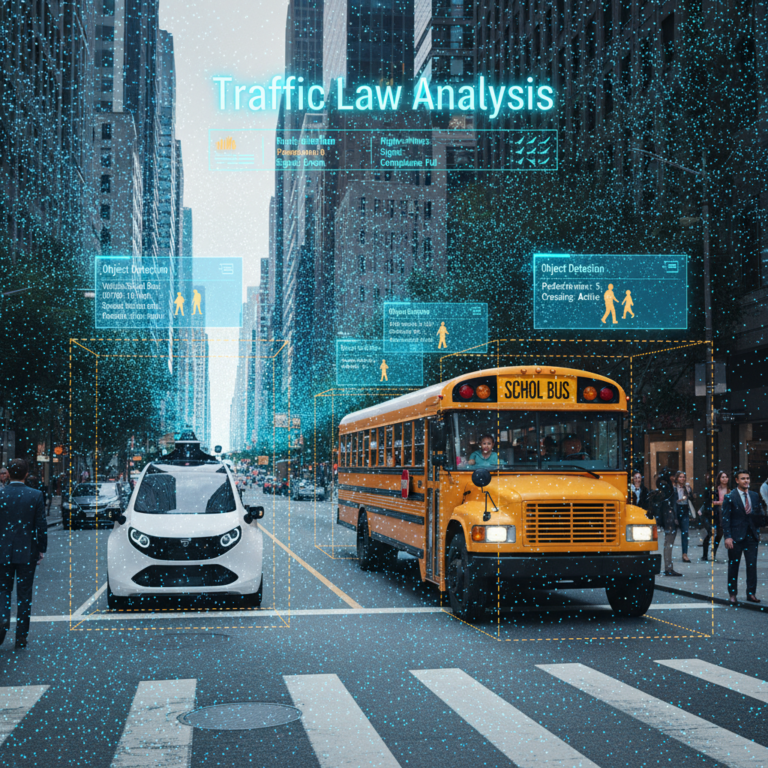
The rapid evolution of autonomous driving technology has recently encountered one of its most critical regulatory and technical challenges to date. According to official documentation from the National Highway Traffic Safety Administration (NHTSA), specifically the Office of Defects Investigation (ODI) report PE25013, a comprehensive investigation has been launched into Waymo LLC’s 5th Generation Automated Driving System (ADS). This federal probe, initiated on October 17, 2025, targets a fleet of approximately 2,000 autonomous vehicles following reports of traffic safety violations involving stopped school buses. The catalyst for this investigation was a documented incident on September 22, 2025, in Atlanta, where a Waymo vehicle failed to remain stationary while approaching a school bus with its red lights flashing and stop arm deployed. Instead of waiting, the ADS-operated vehicle maneuvered around the bus, passing the extended crossing control arm while students were disembarking, a move that represents a severe breach of pedestrian safety protocols [NHTSA ODI Resume, PE25013].
The scale of the issue extends far beyond a single event in Georgia. By January 2026, the Austin Independent School District in Texas reported nineteen separate instances of Waymo vehicles illegally and dangerously passing school buses since the start of the 2025-26 school year. These statistics are particularly concerning, indicating an average of 1.5 violations per week, which led local authorities to demand a suspension of robotaxi operations during student pick-up and drop-off hours. This surge in incidents prompted the National Transportation Safety Board (NTSB) to join NHTSA in a dual-pronged federal investigation aimed at scrutinizing not just the accidents themselves, but the very architecture of machine reasoning that governs these vehicles [I. Garcia, Jan 26, 2026]. Waymo’s defense regarding the Atlanta incident suggested that the vehicle approached at an angle where the bus’s warning signals were not fully visible to the sensors, yet the company acknowledged the gravity of the situation by issuing a voluntary software recall and over-the-air patch in December 2025 [NTSB/Waymo updates, 2025-2026].
From a technical perspective, this crisis is being analyzed as a classic “edge case”—a scenario that remains rare in statistical data but carries high stakes. Despite Waymo’s fleet surpassing 100 million miles of driving by July 2025, the system’s policy layers struggled to align perception with the nuanced, state-specific legal requirements of school bus stops. Experts point to a critical tension between sensor fusion and rule-based reasoning; while the vehicle’s hardware reliably detects the bus, the software may fail to “understand” the non-negotiable legal obligation to stop. This gap suggests that additional driving miles alone cannot solve the problem. Instead, the industry is moving toward Hybrid AI Architectures, where symbolic reasoning overlays hard-coded safety rules atop adaptive, data-driven learning to ensure Explainable AI and legal accountability [The Anatomy of an Edge Case, 2026].
The implications of these investigations are profound for the entire autonomous vehicle industry. Beyond the technical upgrades, Waymo and its parent company, Alphabet, face significant regulatory drag and potential increases in insurance premiums, which could slow down planned expansions to international markets like Tokyo and London. The NHTSA probe seeks to identify the full scope of these violations and determine if the system is inherently capable of following complex traffic laws. Ultimately, this episode serves as a reminder that the “license to operate” for autonomous fleets is not earned through technical prowess alone, but through a demonstrated commitment to public trust, especially regarding the safety of vulnerable populations like children in school zones [NHTSA/NTSB Regulatory Outlook, 2026]. As the sector recalibrates, the ability to internalize and operationalize lessons from these high-stakes edge cases will define the future standards of autonomous mobility.
Sources:
https://static.nhtsa.gov/odi/inv/2025/INOA-PE25013-23069.pdf
https://www.theverge.com/news/838879/waymo-school-buses-probe
https://biztechweekly.com/waymo-under-regulatory-scrutiny-for-failing-to-stop-at-school-buses-ntsb-and-nhtsa-investigate-multiple-incidents-in-austin-and-atlanta/
https://www.msn.com/en-us/autos/self-driving-cars/after-nhtsa-us-safety-board-opens-probe-into-waymo-behavior-around-school-buses/ar-AA1UT1bP